
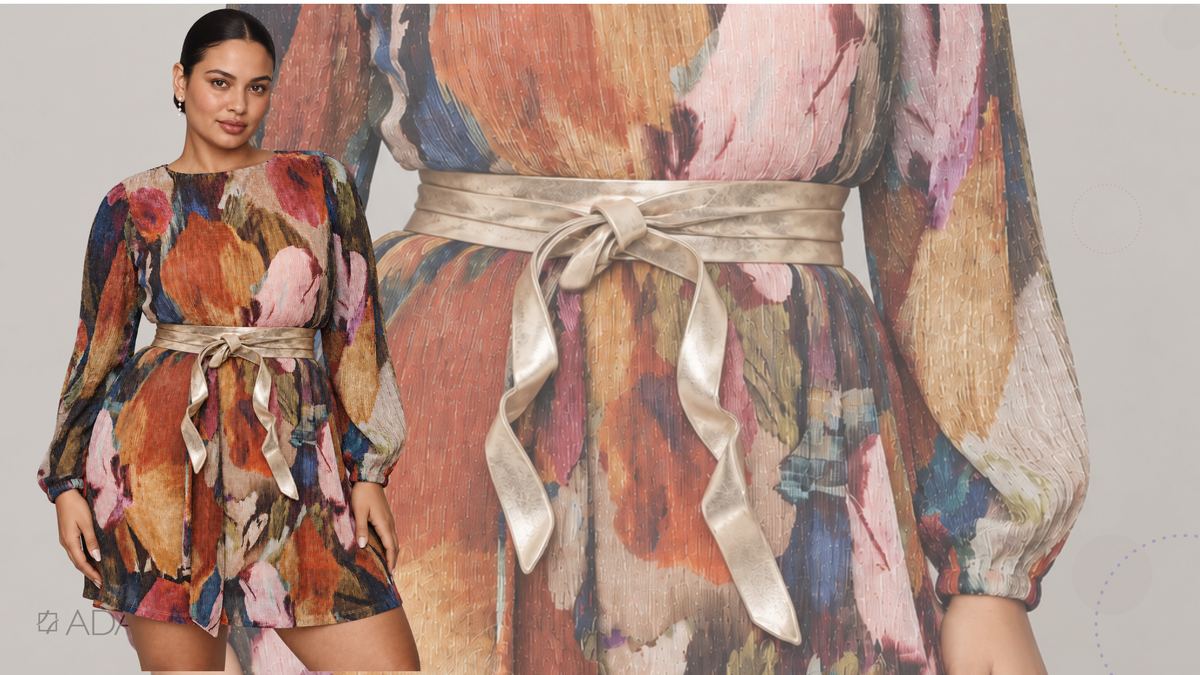
How a Belt Creates a Waist, So You Don’t Have to Have One.
“I can’t wear a belt. I don’t have a waist.”
If I had a dollar for every time a woman told me this, I’d have… well, a lot of belts.
And I get it.
Somewhere along the way, we got the idea that belts are for women who are already thin, already have flat stomachs, or were simply blessed with one of those beautifully defined waists.
But here’s the part I wish more women knew:
You do not need to have a naturally defined waist to wear a belt. A belt is actually one of the styling tools you can use to create the appearance of one.

I know this firsthand because I don’t have a naturally defined waist either. I tend to carry more through my middle, so I've learned that for my body, it isn't simply about throwing a belt over whatever I'm wearing and cinching away.
Trust me. That does not always end well.
What I've learned from years of designing belts and styling women is that it's about what you're belting, how you're creating proportion, and where you're directing the eye.
The simplest way I can explain it is this:
Let your clothes create the shape. Let your belt define it.
Here’s how.
1. How Do You Wear a Belt If You Carry Weight Around Your Middle?
Let's actually start with what not to do.
If I put on a tight, fitted T-shirt that hugs my middle and then cinch a belt around it, technically, yes, I've created a waist.

But I've also squeezed everything around that waist.
The result? Things can start bulging above and below the belt.
Not sexy. At least not in my opinion.
The problem isn't my body.
And it isn't the belt.
It's what I'm asking the belt to do.
If a garment is already clinging to the area I don't necessarily want to emphasize, simply putting a belt over it isn't magically going to create the silhouette I'm looking for.
Instead, I like to give my belt something to work with.

Belt Styling Tip: It Might Be Your Top, Not Your Belt!
Ever put on a belt and feel like it suddenly emphasizes rolls you didn't even notice before? Before you blame the belt, take a look at your top!
When you add a belt over an already tight-fitting shirt, it can create extra bunching and accentuate areas around your waist.
The styling trick? Try swapping your fitted shirt for a slightly looser, flowier top. This gives the fabric room to drape naturally while allowing your belt to cinch your waist and create a more flattering shape.
Remember, your belt is supposed to enhance your outfit, not fight against it!
Same body. Same belt. Different top. A whole new look!

2. Add Volume First, Then Create the Waist
Now let's take that exact same fitted T-shirt.
This time, I add a slightly oversized blazer or cardigan—something with a little more volume and structure.
Then I add the belt.
Completely different effect.

The blazer gives me volume through the upper body. The fabric moves away from my middle. Then the belt pulls everything inward at one strategic point.
Suddenly, the eye sees shape.
Same woman. Same body. Different proportions.
My body didn't change.
My styling did.

Skinny leather wrap belt - Black
This is one of my favorite examples of why a belt isn't really about being skinny. It's about creating contrast between volume and definition.

3. Let an A-Line Silhouette Do Some of the Work
An A-line blouse or dress can be another great option because the garment is already helping create the silhouette.
Instead of clinging tightly through your middle, it gives you some movement and volume.
Then you add a belt.
Now you're telling the eye exactly where you want the waistline to be.
The garment creates the shape. The belt puts an exclamation point on it.
Once again, I didn't need to start with a naturally defined waist.
My clothing helped create one visually.


4. How Do You Belt a Jumpsuit to Create a Waist?
Jumpsuits are practically begging for a belt.
A loose or relaxed jumpsuit can sometimes read as one long column of fabric. Comfortable? Absolutely. But depending on the cut, your shape can disappear underneath it.
Add a belt and suddenly the eye sees:
Top. Waist. Bottom.
You've broken up that long silhouette and created proportion.
And here's the fun part:
You get to decide where the waist goes.
The jumpsuit doesn't need to give you a perfectly defined waist.
The belt can.

5. How Do You Belt a Shapeless Dress?
A loose, shapeless dress is actually one of my favorite things to belt.
And I'm not talking about a clingy dress that's already hugging your middle.
I mean a dress with some extra fabric and volume—one that falls fairly straight and doesn't give you much shape on its own.

Wear it as-is and sometimes all that fabric can overwhelm your figure.
Now add a belt.
Suddenly, the fabric blouses slightly above the belt, flows away below it, and comes inward at one strategic point.
The dress gives you the volume. The belt gives you the shape.

That combination creates the appearance of a waist—even when you don't naturally have a defined one.
Same body.
Same dress.
Different proportions.

6. How Do You Wear a Belt With a Monochromatic Outfit?
This might be one of my favorite styling tricks.
Dress in one color from head to toe.
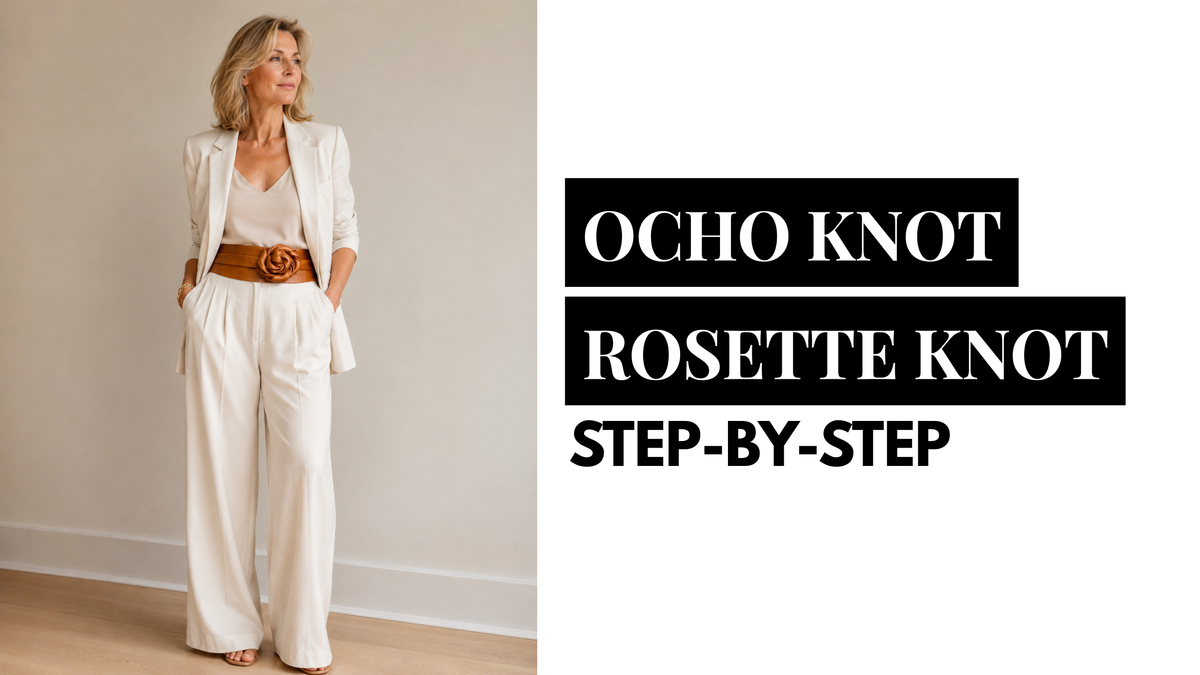
Black on black. Cream on cream. Navy on navy. Chocolate on chocolate.
A monochromatic outfit creates a beautiful, long, uninterrupted visual line.
Now add a contrasting belt.
Maybe it's cognac over cream. Black over camel. Metallic over black. Or an unexpected pop of color.
Where does your eye immediately go?
To the belt.

And where is the belt?
At your waist.
You've just told the eye exactly where you want your waistline to be.
The monochromatic outfit gives you that beautiful long line.
The belt creates the focal point—and the waist.
And this is such a good reminder that creating a waist isn't always about physically cinching something tighter.
Sometimes it's simply about directing the eye.


7. Use a Blazer/Coat + Belt to Create an Hourglass Effect
This is another styling trick I love for women who don't naturally have a very defined waist.
A blazer creates structure through the shoulders and gives you a little volume through the torso.

Then the belt brings the silhouette inward.
Visually, you've created:
out → in → out
That proportion gives the appearance of a more defined, hourglass-like silhouette.
Your body didn't have to create the hourglass.
Your outfit did.
And that is such an important distinction.


8. Where Should a Belt Sit to Create a Waist?
Here's another little secret:
Your belt doesn't necessarily have to sit exactly where you think your “natural waist” is.
Move it around.


Shop Lucky Wrap Belt - Wrap yourself today.
Try it slightly higher.
Try it at your natural waist.
Depending on your torso, the garment you're wearing and your proportions, moving a belt even an inch or two can completely change what you see in the mirror.
This is also one reason I love an adjustable wrap belt. You're not locked into one predetermined placement or hole. You can experiment with where it sits, how tightly you tie it and how much fabric you want to blouse around it.

Don't get hung up on where your waist is supposed to be.
Find the placement that creates the proportion you like.
That's your visual waistline.

9. Think About Proportion, Not Your Size
This is where I think we sometimes get styling wrong.
We look in the mirror and think:
If I were thinner, this would look better.
If my stomach were flatter, I could wear that.
If I had more of an hourglass figure, then I could wear a belt.
But so much of what we perceive as flattering isn't simply about size.
It's proportion.
Where does the garment come in?
Where does it flow out?
Where does your eye land first?
Where have you created a break in the silhouette?
These are things we can change with clothing and accessories—without changing our bodies at all.
And after years of designing belts and styling women, this is something I wish more women understood:
A belt isn't a reward you get to wear once you have the “right” body. It's a styling tool you can use on the body you already have.

10. You Don't Need to Wait for Your Body to Change
And this might be the most important part.
You don't have to lose 10 pounds before you wear a belt.
You don't need a flatter stomach.
You don't need an hourglass figure.
And you certainly don't need to wait for some future version of yourself before you start having fun with your clothes.
Good styling is about understanding your body and learning how to create the proportions you love with the body you have today.
Sometimes that means adding volume.
Sometimes it means choosing an A-line silhouette.
Sometimes it means creating a long monochromatic line.
Sometimes it means moving the belt an inch higher.
And sometimes…
one belt = transformation.
Same woman.
Same body.
No inches lost.
Just a completely different silhouette.
So the next time you catch yourself saying:
“I can't wear a belt because I don't have a waist.”
Turn that thought around.
You don't need to have a defined waist to wear a belt.
Let the belt help create one.


Belt Styling FAQs
Can I wear a belt if I have a tummy?
Absolutely. Instead of cinching a belt tightly over a clingy garment, try pairing it with clothing that gives you some volume or structure, such as a blazer, cardigan, relaxed jumpsuit, A-line silhouette or loose dress. The contrast between volume and definition helps create the visual appearance of a waist.
Can I wear a belt if I don't have an hourglass figure?
Yes. A belt can actually help create the proportions we associate with an hourglass silhouette. Adding volume above or below the belt and then defining the middle helps visually create that out → in → out shape.
Where should I wear a belt if I don't have a defined waist?
Start around your natural waist and experiment slightly above it. Your ideal placement depends on your torso, outfit and proportions. Don't worry about where a belt is technically “supposed” to sit—look for the placement that creates the silhouette you like.
Do belts make you look slimmer?
A belt doesn't change your body, but it can change how an outfit is visually proportioned. It can define the middle, break up a long silhouette and direct the eye toward the waist. Pairing a contrasting belt with a monochromatic outfit is one particularly effective way to create a long visual line while still defining the waist.
What kind of belt is best for creating a waist?
Look for a belt that gives you flexibility in both placement and fit.
An adjustable wrap belt can be especially useful because you can position it where it works best with your proportions and adjust how tightly or loosely you wear it.
At ADA Collection, this versatility is one of the reasons wrap belts have remained such an important part of our collection:
One belt can completely transform the clothes already hanging in your closet.
— Ada
Founder & Designer, ADA Collection



Leave a comment
This site is protected by hCaptcha and the hCaptcha Privacy Policy and Terms of Service apply.